


What is the optical property of 3k Carbon Fiber Fabrics?
Nov 03, 2026
Leave a message
What is the optical property of 3k Carbon Fiber Fabrics?
As a supplier of 3k carbon fiber fabrics, I've witnessed firsthand the growing fascination with these materials, not only for their mechanical prowess but also for their intriguing optical properties. In this blog, we'll delve into the optical characteristics of 3k carbon fiber fabrics, exploring what makes them unique and how these properties can be harnessed in various applications.
Understanding 3k Carbon Fiber Fabrics
Before we dive into optical properties, let's briefly understand what 3k carbon fiber fabrics are. The "3k" refers to the number of carbon filaments in each tow. A "k" stands for a thousand, so 3k means there are approximately 3,000 carbon filaments bundled together in each tow. These tows are then woven into fabrics, which can be used in a wide range of industries, including aerospace, automotive, sports equipment, and more.
The Visual Appearance of 3k Carbon Fiber Fabrics
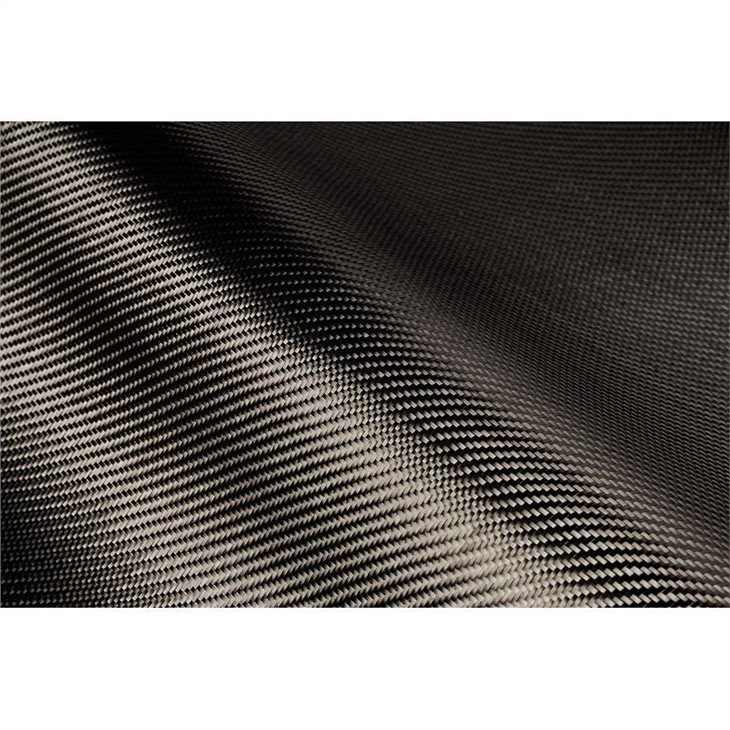
One of the most striking features of 3k carbon fiber fabrics is their distinct visual appearance. The woven pattern creates a regular and repeating texture that is both aesthetically pleasing and recognizable. The fabric has a matte or semi - matte finish, which gives it a sophisticated and high - tech look.
The color of 3k carbon fiber fabrics is typically black, which is due to the nature of carbon itself. Carbon absorbs a wide range of light wavelengths, resulting in the black color we commonly associate with carbon fiber. This black color can be both an advantage and a limitation, depending on the application. On one hand, it gives the fabric a sleek and modern appearance that is often desired in high - performance products. On the other hand, it may limit the color options for some applications where a wider color palette is required.
However, some manufacturers, including us, offer colored options. For example, our 3K Carbon Kevlar Fabric Colored provides a unique combination of carbon fiber and Kevlar, along with the option of different colors to meet various design needs.
Light Reflection and Absorption
3k carbon fiber fabrics have specific light reflection and absorption properties. As mentioned earlier, carbon fibers absorb a significant amount of light. This absorption is due to the electronic structure of carbon atoms. When light hits the surface of the carbon fiber fabric, a large portion of the light energy is absorbed by the carbon atoms, converting it into heat energy.
The amount of light reflected from the fabric is relatively low, which contributes to its matte appearance. The reflection that does occur is mainly due to the surface irregularities of the woven fabric. These irregularities cause the light to scatter in different directions, resulting in a diffuse reflection rather than a specular reflection like that of a mirror - like surface.
The light absorption properties of 3k carbon fiber fabrics can be beneficial in some applications. For example, in aerospace and automotive industries, the ability to absorb light and reduce glare can improve visibility and safety. In addition, the heat generated from light absorption can be managed through proper thermal design.

Optical Anisotropy
3k carbon fiber fabrics exhibit optical anisotropy. This means that their optical properties change depending on the direction of light propagation and the orientation of the fabric. The woven structure of the fabric creates a preferred direction for light propagation. Light traveling parallel to the fiber direction may experience different absorption, reflection, and transmission characteristics compared to light traveling perpendicular to the fiber direction.
This optical anisotropy can be exploited in applications where directional control of light is required. For instance, in some display technologies or optical sensors, the anisotropic properties of 3k carbon fiber fabrics can be used to manipulate light in a specific way, enhancing the performance of these devices.
Applications of 3k Carbon Fiber Fabrics Based on Optical Properties
- Aerospace: In aerospace applications, the optical properties of 3k carbon fiber fabrics play a crucial role. The low reflectivity and light absorption help reduce the radar cross - section of aircraft components, making them less detectable by radar systems. Additionally, the ability to manage heat generated from light absorption is important for maintaining the structural integrity of the aircraft in high - energy environments.
- Automotive: In the automotive industry, the unique visual appearance of 3k carbon fiber fabrics is highly valued. Many high - end sports cars use carbon fiber parts for their aesthetic appeal. The low reflection also helps to improve the driver's visibility by reducing glare. Moreover, the optical anisotropy can be used in the design of automotive lighting systems to control the distribution of light.
- Consumer Electronics: In consumer electronics, 3k carbon fiber fabrics are increasingly being used for their aesthetic and functional properties. The sleek black appearance can enhance the overall design of electronic devices such as laptops and smartphones. The light absorption properties can also be useful for reducing electromagnetic interference in some applications.
Our Product Range and Their Optical Features
We offer a diverse range of 3k carbon fiber fabrics, each with its own unique optical and mechanical properties.
- Hexagon Carbon Fiber 240g: Our Hexagon Carbon Fiber 240g has a distinct hexagonal weaving pattern, which not only enhances its mechanical strength but also creates an interesting visual texture. The light scattering effect due to this pattern gives it a more dynamic appearance compared to traditional plain - weave fabrics.
- 3k Carbon Fiber Twill Weave 200g: The 3k Carbon Fiber Twill Weave 200g has a classic twill pattern. This pattern causes the fabric to reflect light in a more pronounced way, adding a sense of depth and dimension to its appearance. It is also lighter in weight, which can be advantageous in applications where weight is a critical factor.
- 12K 2 X 2 Twill Weave Carbon Fiber Fabric: Although it is 12K rather than 3k, our 12K 2 X 2 Twill Weave Carbon Fiber Fabric shares some similar optical properties with 3k fabrics. The 2x2 twill pattern gives it a smooth and regular texture, and its optical anisotropy can be carefully controlled for specific applications.
- 1K Plain Weave Ultralight Carbon Fiber Fabric: Our 1K Plain Weave Ultralight Carbon Fiber Fabric has a very fine and uniform appearance due to the smaller 1K tow size. The plain - weave structure results in a more isotropic optical behavior compared to some of the twill - weave fabrics, making it suitable for applications where a more consistent optical response is required.
For Those Interested in Purchasing
If you are intrigued by the optical properties and other advantages of our 3k carbon fiber fabrics and considering using them in your projects, we would be delighted to have a discussion with you. Whether you are in the aerospace, automotive, consumer electronics, or any other industry, our team is ready to provide you with detailed product information, technical support, and customized solutions.
Contact us to start the purchasing process and explore how our 3k carbon fiber fabrics can enhance your products' performance and aesthetics. We look forward to working with you and helping you achieve your goals.
References
- "Carbon Fibers and Their Composites" by Luigi Nicolais and Antonio Pegoretti.
- "Handbook of Composites" edited by Luigi Nicolais and Antonio V. DiBenedetto.
- Journal articles on carbon fiber materials and their optical properties in reputable materials science and engineering journals.
Send Inquiry