


What is the electrical conductivity of carbon fiber fabric?
Nov 02, 2026
Leave a message
Carbon fiber fabric is a remarkable material that has gained widespread popularity in various industries due to its exceptional properties. One of the intriguing aspects of carbon fiber fabric is its electrical conductivity. In this blog post, we will explore the electrical conductivity of carbon fiber fabric, its influencing factors, applications, and why it matters in different scenarios. As a carbon fiber fabric supplier, we are committed to providing you with in - depth knowledge about our products to help you make informed decisions.
Understanding the Basics of Electrical Conductivity
Electrical conductivity is a measure of a material's ability to conduct an electric current. It is the reciprocal of electrical resistivity and is typically measured in siemens per meter (S/m). Materials can be classified into conductors, semiconductors, and insulators based on their electrical conductivity. Conductors have high electrical conductivity, allowing electric charges to flow freely. Insulators, on the other hand, have very low conductivity and impede the flow of electric current.
Carbon fiber fabric lies in the conductor category, but its conductivity is different from typical metallic conductors. Carbon fibers are made of carbon atoms arranged in a crystallographic structure. These atoms form a network of delocalized electrons that are free to move, which in turn enables the conduction of electricity.
Factors Influencing the Electrical Conductivity of Carbon Fiber Fabric
Fiber Quality and Structure
The quality and structure of the carbon fibers in the fabric greatly affect its electrical conductivity. High - quality carbon fibers with a well - ordered atomic structure have more delocalized electrons that can move freely along the fiber axis. Fibers with fewer defects, such as voids or dislocations, enhance the conduction path for electrons, resulting in higher conductivity.
Fabric Weave Pattern
The weave pattern of the carbon fiber fabric also plays a role. Different weave patterns, such as plain weave, twill weave, and satin weave, have varying arrangements of fibers. In a plain weave, the fibers are interlaced in a simple over - and - under pattern, which provides a relatively straightforward path for electron flow in some directions. Twill and satin weaves, with their more complex interlacing patterns, may slightly disrupt the electron flow between fibers, affecting the overall conductivity. However, the impact of the weave pattern on conductivity is often secondary compared to fiber quality.
Fiber Orientation
The orientation of carbon fibers in the fabric is crucial. Carbon fibers have anisotropic electrical conductivity, meaning their conductivity is different along different directions. The conductivity is highest along the fiber axis because the delocalized electrons can move more freely in this direction. When fibers are aligned in a specific direction in the fabric, the electrical conductivity will be significantly higher in that direction compared to the perpendicular directions.
Measuring the Electrical Conductivity of Carbon Fiber Fabric
There are several methods to measure the electrical conductivity of carbon fiber fabric. One common approach is the four - point probe method. In this method, four probes are placed on the fabric surface. A current is passed through the outer two probes, and the voltage is measured between the inner two probes. Using Ohm's law and the known dimensions of the sample, the electrical resistivity and then the conductivity can be calculated.
Another method is the two - point probe method, which is simpler but less accurate. It involves applying a current across two probes on the fabric surface and measuring the resulting voltage. This method is more prone to errors due to contact resistance between the probes and the fabric.
Applications of Carbon Fiber Fabric's Electrical Conductivity
Aerospace Industry
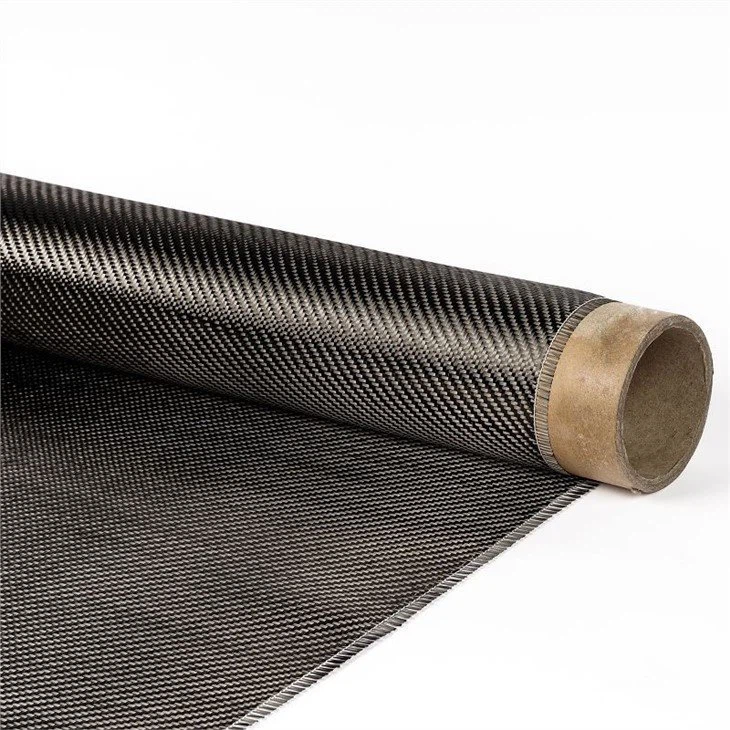
In the aerospace industry, carbon fiber fabric is widely used for its lightweight and high - strength properties. The electrical conductivity of carbon fiber fabric is also beneficial. It can be used for electromagnetic shielding to protect sensitive electronic equipment from electromagnetic interference (EMI). For example, aircraft interiors often use carbon fiber fabric - based shielding materials to ensure the proper functioning of avionics systems. Our Thin Carbon Fiber Fabric can be an excellent choice for such applications due to its thin profile and good electrical conductivity.

Automotive Industry
In the automotive sector, carbon fiber fabric is increasingly being used to reduce vehicle weight and improve fuel efficiency. The electrical conductivity of carbon fiber can be utilized in electric vehicle (EV) applications. It can serve as a conductive path for electrical signals or as a component in battery management systems. For instance, carbon fiber fabric can be used to create lightweight and conductive structural parts in EVs. Our Carbon Fiber Fabric Kit provides all the necessary materials for automotive manufacturers to incorporate carbon fiber fabric in their designs.
Electronics and Telecommunications
Carbon fiber fabric's electrical conductivity makes it suitable for use in electronics and telecommunications. It can be used as a flexible and lightweight conductor in printed circuit boards (PCBs) or as an EMI shielding material in electronic devices. Our 2k Carbon Fiber Fabric is well - suited for these applications, offering a good balance between conductivity and flexibility.
Defense and Security
In the defense industry, carbon fiber fabric's electrical conductivity can be combined with other properties for specialized applications. For example, Light Weight Para Aramid Bullet Proof Inherent FR Durable Cut Resistant Fabric can be integrated with carbon fiber fabric for creating advanced protective gear that also has electromagnetic shielding capabilities. This type of fabric can be used in military uniforms, vehicle armor, and other defense - related equipment.
Why Our Carbon Fiber Fabric Stands Out
As a carbon fiber fabric supplier, we take pride in offering high - quality products with consistent electrical conductivity. We source the best raw materials and use advanced manufacturing processes to ensure that our carbon fibers have a well - ordered structure and minimal defects. Our quality control measures include rigorous testing of electrical conductivity for each batch of fabric.
We also offer a wide range of fabric types, including different weave patterns and fiber orientations, to meet the diverse needs of our customers. Whether you need a fabric with high conductivity in a specific direction or a fabric with a particular weave for aesthetic and functional purposes, we can provide the right solution. Our 3K Plain Weave Carbon Fiber Fabric is a popular choice among customers who require both good conductivity and a classic appearance.
Contact Us for Procurement
If you are interested in purchasing carbon fiber fabric for your specific applications, we invite you to contact us for further discussions. Our team of experts can provide detailed information about our products' electrical conductivity, help you choose the right fabric type, and offer competitive pricing. We are committed to providing excellent customer service and ensuring that you get the best carbon fiber fabric solutions for your projects.
References
- "Carbon Fiber Reinforced Composites: Design and Applications" by David Hull and T. W. Clyne
- "Electrical Conductivity of Carbon Nanotube - Based Composites: A Review" by A. F. Yu and S. Ramakrishna
- Journal of Composite Materials, various issues related to carbon fiber properties.
Send Inquiry