


What is the dielectric constant of carbon cloth?
Nov 23, 2026
Leave a message
Hey there! As a carbon cloth supplier, I often get asked all sorts of questions about our products. One question that pops up quite a bit is, "What is the dielectric constant of carbon cloth?" Well, let's dive right into this topic and break it down in a way that's easy to understand.
First off, let's talk about what the dielectric constant actually is. In simple terms, the dielectric constant, also known as relative permittivity, is a measure of how much a material can store electrical energy in an electric field compared to a vacuum. It's basically a way to quantify a material's ability to polarize in response to an applied electric field. A higher dielectric constant means the material can store more electrical energy.
Now, when it comes to carbon cloth, the dielectric constant can vary depending on a few factors. The type of carbon fibers used, the weave pattern, and even the manufacturing process can all have an impact on the dielectric constant.
Carbon cloth is made up of carbon fibers, which are known for their excellent electrical conductivity. However, when you turn these fibers into a cloth, the overall electrical properties change. The fibers are arranged in a specific pattern, and there are spaces between them. This structure affects how the carbon cloth responds to an electric field.
Typically, the dielectric constant of carbon cloth is relatively high compared to some other materials. But it's not as high as some purely insulating materials. The carbon fibers in the cloth can conduct electricity to some extent, but the weave and the gaps between the fibers also introduce some resistance. This combination results in a unique dielectric behavior.
Let's take a closer look at why the dielectric constant of carbon cloth matters. In applications where electrical insulation or energy storage is important, knowing the dielectric constant is crucial. For example, in some electronic devices, carbon cloth might be used as a shielding material. The dielectric constant helps determine how well the carbon cloth can block out electromagnetic interference.
In the field of energy storage, like in capacitors, the dielectric constant of carbon cloth can affect the capacitance. A higher dielectric constant generally means a higher capacitance, which is desirable in capacitor applications.
Now, let me introduce you to some of the carbon cloth products we offer. We have a Black Activated Carbon Active Carbon Filter Activated Carbon Cloth. This product is not only great for filtration but also has interesting electrical properties. The activation process of the carbon can influence its dielectric constant, making it suitable for certain electrical applications where a combination of filtration and electrical functionality is needed.
Another product we have is the 12k Carbon Fiber Cloth Roll Plain 400g. The 12k refers to the number of carbon filaments in each tow. This type of carbon cloth has a specific weave pattern that can affect its dielectric constant. It's commonly used in various industries, including automotive and aerospace, where both mechanical strength and electrical properties are important.
For those working on yacht projects, we offer the 3K 200GSM Twill Weave Carbon Fiber Cloth For Yacht. The twill weave gives this carbon cloth a unique look and feel, but it also has an impact on its electrical behavior. The 200 grams per square meter (GSM) specification indicates the density of the cloth, which can influence the dielectric constant as well.
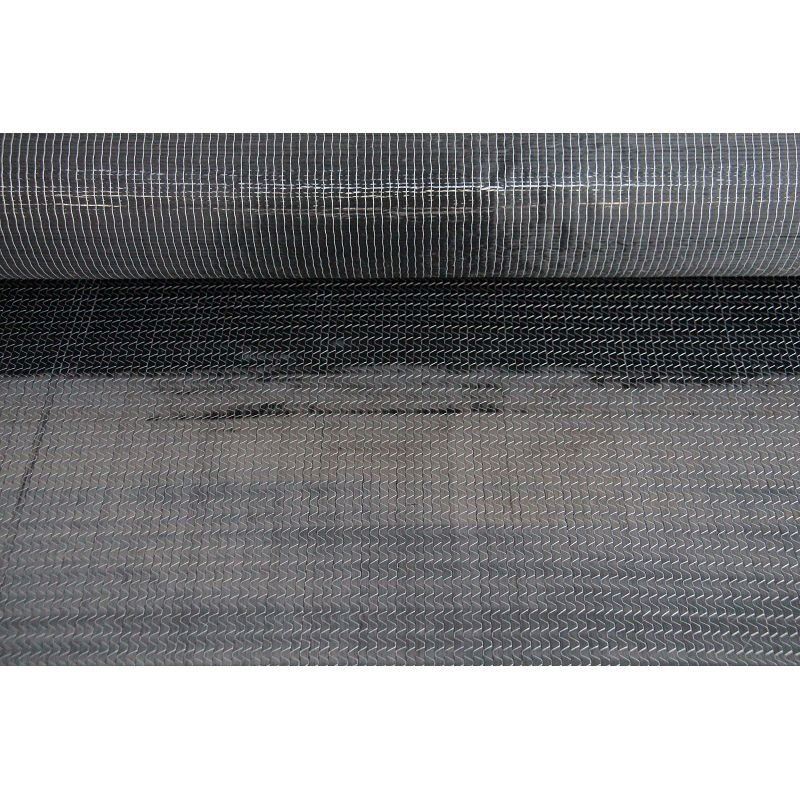

If you're looking for a carbon cloth with high elastic modulus, we have the High Elastic Modulus 200g /Sq M Roll Carbon Fiber Fabric Cloth. The high elastic modulus means the cloth can withstand a lot of stress without deforming. And as you might expect, the structure that gives it this high elastic modulus also affects its dielectric properties.
Lastly, our 12k Unidirectional Carbon Fiber Fabric is another great option. The unidirectional arrangement of the carbon fibers gives this fabric very different electrical properties compared to woven carbon cloth. The dielectric constant in the direction of the fibers can be quite different from the perpendicular direction.
So, if you're in the market for carbon cloth and need a specific dielectric constant for your application, we're here to help. We can provide samples and technical data so you can test and see which product is the best fit for you. Whether you're working on an electronic project, an energy storage device, or a high - performance vehicle, our carbon cloth products have a lot to offer.
If you're interested in learning more or want to discuss your specific requirements, don't hesitate to reach out. We're always happy to have a chat and help you find the perfect carbon cloth solution for your needs.
References
- "Introduction to Dielectric Materials" by John M. Schneider
- "Carbon Fiber Composites: Properties and Applications" by David Hull and T. W. Clyne
Send Inquiry