




How is carbon cloth made?
Oct 07, 2026
Leave a message
Carbon cloth is a remarkable material known for its high strength, low weight, and excellent conductivity. As a seasoned carbon cloth supplier, I'm excited to share with you the intricate process of how this exceptional material is made.
Raw Material Selection
The journey of carbon cloth begins with the careful selection of raw materials. The most common precursor for carbon cloth is polyacrylonitrile (PAN), a synthetic polymer. PAN is chosen for its ability to form long, continuous fibers that can withstand the high - temperature processes involved in carbonization. Other precursors like pitch and rayon can also be used, but PAN is preferred due to its high carbon yield and superior mechanical properties. The quality of the raw material is of utmost importance as it directly affects the final properties of the carbon cloth. We source high - grade PAN polymers to ensure that our carbon cloth meets the highest standards.
Fiber Spinning
Once the raw material is selected, the next step is fiber spinning. In this process, the PAN polymer is dissolved in a suitable solvent to form a viscous solution called a dope. The dope is then forced through tiny holes in a spinneret, similar to the way a spider creates its silk. As the dope is extruded, it solidifies into long, thin fibers. These fibers are then stretched to align the polymer molecules in the fiber, which enhances the strength and orientation of the resulting carbon fibers. This stretching process is carefully controlled to ensure uniform fiber dimensions and properties. The fibers produced at this stage are called precursor fibers, and they still need to undergo further processing to become carbon fibers.
Stabilization
After spinning, the precursor fibers are subjected to a stabilization process. This step is crucial as it prevents the fibers from melting or degrading during the subsequent high - temperature carbonization process. The fibers are heated in an oxygen - rich environment at a temperature ranging from 200°C to 300°C. During this process, the PAN molecules undergo a series of chemical reactions, including cyclization, dehydrogenation, and oxidation. These reactions convert the linear PAN molecules into a more stable, ladder - like structure. The stabilization process can take several hours, and it is carefully monitored to ensure that all the fibers are uniformly stabilized. This uniformity is essential for the consistent quality of the final carbon fibers.
Carbonization
Once the fibers are stabilized, they are ready for carbonization. The stabilized fibers are heated in a nitrogen - rich environment at extremely high temperatures, typically between 1000°C and 3000°C. At these temperatures, the non - carbon elements in the fibers, such as hydrogen, oxygen, and nitrogen, are removed in the form of gases. The remaining carbon atoms rearrange themselves into a graphite - like structure, which gives the carbon fibers their high strength and stiffness. The carbonization process is a critical step in determining the final properties of the carbon fibers. Higher carbonization temperatures generally result in fibers with higher strength and modulus, but they also require more energy and can be more challenging to control.
Surface Treatment
After carbonization, the carbon fibers often undergo a surface treatment. This treatment is done to improve the adhesion between the carbon fibers and the matrix material (such as resin) in composite applications. The surface treatment typically involves oxidation, which creates functional groups on the fiber surface. These functional groups can react with the matrix material, forming a strong chemical bond. The surface treatment can be carried out using various methods, including electrochemical oxidation and gas - phase oxidation. The choice of method depends on the specific requirements of the application and the desired properties of the final composite.
Weaving
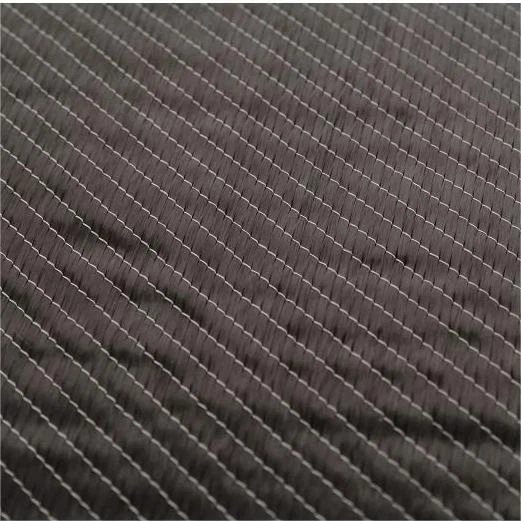
Once the carbon fibers are ready, they are woven into a cloth. There are several different weaving patterns available, each with its own unique properties. Twill weave is one of the most common patterns used for carbon cloth. It is characterized by a diagonal pattern that gives the cloth good drapability and strength. Plain weave is another popular option, which offers a more uniform appearance and is suitable for applications where a flat surface is required. Biaxial weaving involves weaving the fibers in two directions (usually at 0° and 90°), which provides strength in multiple directions. Our company offers a wide range of carbon cloth products with different weaving patterns to meet the diverse needs of our customers. For example, our 3K 200GSM Twill Weave Carbon Fiber Cloth For Yacht is specifically designed for yacht construction, taking advantage of the twill weave's excellent drapability and strength.

Finishing
After weaving, the carbon cloth may undergo a finishing process. This can involve coating the cloth with a sizing agent, which protects the fibers during handling and storage and also improves the adhesion between the cloth and the matrix material. The sizing agent can be tailored to the specific requirements of the application, such as improving the compatibility with a particular resin system. Additionally, the cloth may be cut into the desired sizes and shapes, and edge finishing may be applied to prevent fraying.
Quality Control
Throughout the manufacturing process, strict quality control measures are in place. We use advanced testing equipment to measure the physical and mechanical properties of the carbon fibers and the final carbon cloth. Tensile strength, modulus, elongation at break, and thickness are some of the key parameters that are regularly tested. We also conduct visual inspections to ensure that the cloth is free from defects such as holes, knots, and uneven weaving. This stringent quality control helps us to provide our customers with high - quality carbon cloth products that meet or exceed their expectations.
Applications of Carbon Cloth
Carbon cloth has a wide range of applications in various industries. In the aerospace industry, it is used to manufacture aircraft components such as wings, fuselages, and tail sections due to its high strength - to - weight ratio. In the automotive industry, carbon cloth is used for making high - performance parts like body panels, suspension components, and drive shafts, which helps to reduce the weight of the vehicle and improve fuel efficiency. In the sports equipment industry, it is used to make tennis rackets, golf clubs, and bicycles, providing enhanced performance and durability. Our Black Activated Carbon Active Carbon Filter Activated Carbon Cloth is ideal for filtration applications, taking advantage of the carbon cloth's adsorption properties. The 200g Biaxial Carbon Fiber for Strength is suitable for applications where strength in multiple directions is required, such as in structural reinforcements. And our Carbon Fiber Reinforced Composite is used in a variety of high - performance applications where the combination of carbon fibers and a matrix material provides superior properties. Our Pan - Based Carbon Cloth For Reinforcement Carbon Fabric is specifically designed for reinforcement purposes, offering excellent strength and stability.
Contact Us for Procurement
If you are in the market for high - quality carbon cloth, you've come to the right place. As a leading carbon cloth supplier, we are committed to providing our customers with the best products and services. Whether you are involved in aerospace, automotive, sports equipment, or any other industry that requires carbon cloth, we have the solutions for you. Our team of experts is always ready to assist you in choosing the right carbon cloth product for your specific application. We can also provide customization options to meet your unique requirements. If you have any questions or would like to discuss a potential procurement, please feel free to reach out. We look forward to partnering with you and helping you achieve your goals with our top - notch carbon cloth products.
References
- Morgan, R., & Peijs, T. (2001). Carbon fibres for composite applications. CRC Press.
- Harris, B. (Ed.). (2012). Handbook of carbon fiber composites. Woodhead Publishing.
- Delmonte, J. (2013). Technology of carbon and graphite fibers and composites. RTWebster.
Send Inquiry