


How does bending stiffness affect the performance of Triaxial Carbon Fiber 300g?
Jan 05, 2026
Leave a message
Hey there! As a supplier of Triaxial Carbon Fiber 300g, I've been getting a lot of questions lately about how bending stiffness affects its performance. So, I thought I'd take a deep dive into this topic and share my insights.
First off, let's talk about what bending stiffness actually is. In simple terms, bending stiffness refers to a material's ability to resist bending under an applied load. For Triaxial Carbon Fiber 300g, this property is crucial because it determines how well the material can hold its shape and perform under various conditions.
One of the key ways bending stiffness impacts the performance of Triaxial Carbon Fiber 300g is in structural applications. When used in structures like aircraft wings, automotive parts, or sporting equipment, the carbon fiber needs to be able to withstand bending forces without deforming too much. A higher bending stiffness means the material can maintain its integrity, even when subjected to significant stress. This is important for ensuring the safety and reliability of the final product.
For example, in the aerospace industry, where weight and strength are critical, Triaxial Carbon Fiber 300g with high bending stiffness can be used to create lightweight yet strong components. The ability of the carbon fiber to resist bending helps to reduce the risk of structural failure during flight, which is obviously a huge plus.
Another area where bending stiffness plays a big role is in the manufacturing process. When fabricating parts using Triaxial Carbon Fiber 300g, the bending stiffness affects how easily the material can be molded and shaped. Materials with lower bending stiffness are more flexible and easier to work with, but they may not be as suitable for applications that require high structural integrity. On the other hand, materials with higher bending stiffness may be more difficult to shape, but they offer better performance in terms of load-bearing capacity.
Now, let's look at some factors that can affect the bending stiffness of Triaxial Carbon Fiber 300g. One of the main factors is the orientation of the carbon fibers within the material. Triaxial carbon fiber has fibers arranged in three different directions, which gives it unique mechanical properties. The orientation of these fibers can significantly impact the bending stiffness of the material. For instance, if the fibers are aligned in a way that provides more resistance to bending forces in a particular direction, the bending stiffness will be higher in that direction.
The resin matrix used in the carbon fiber composite also plays a role in determining the bending stiffness. The resin acts as a binder, holding the carbon fibers together and transferring the load between them. Different types of resins have different stiffness properties, so the choice of resin can have a significant impact on the overall bending stiffness of the Triaxial Carbon Fiber 300g.
Another important factor is the thickness of the carbon fiber fabric. Generally speaking, thicker fabrics have higher bending stiffness than thinner ones. This is because a thicker fabric has more material to resist the bending forces. However, increasing the thickness also adds weight, which may not be desirable in some applications.
So, how do you choose the right Triaxial Carbon Fiber 300g based on bending stiffness? Well, it really depends on your specific application. If you're working on a project that requires high structural integrity and can tolerate a relatively high weight, then a carbon fiber with higher bending stiffness may be the way to go. On the other hand, if you need a material that is easy to work with and can be shaped into complex geometries, then you may want to consider a carbon fiber with lower bending stiffness.
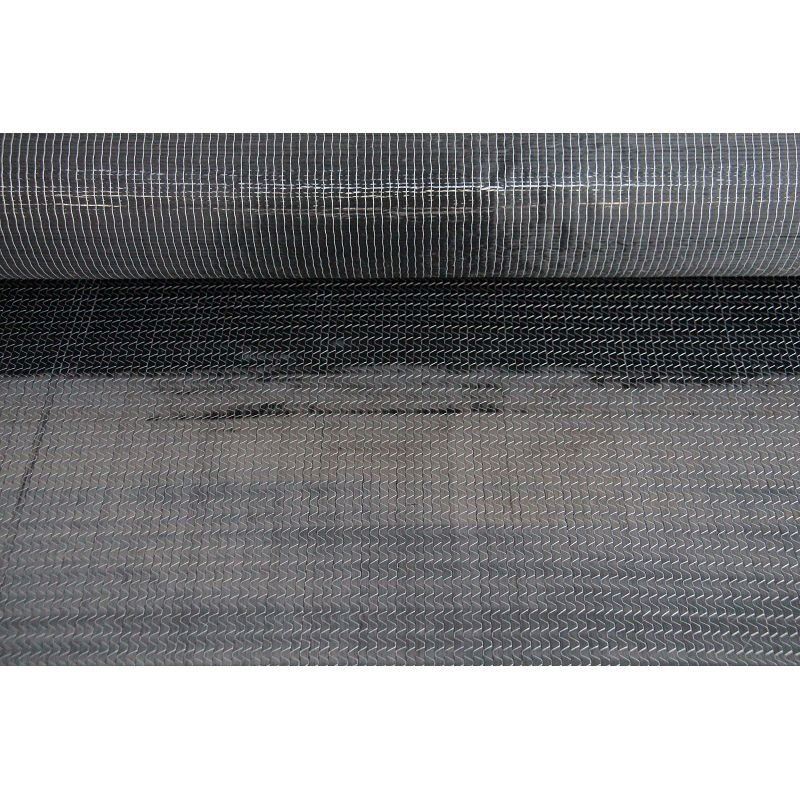

At our company, we offer a range of Triaxial Carbon Fiber 300g products with different bending stiffness properties to meet the diverse needs of our customers. Whether you're looking for a high-performance material for aerospace applications or a more flexible option for prototyping, we've got you covered.
If you're interested in learning more about our Triaxial Carbon Fiber 300g products, you can check out some of our other carbon fiber offerings like Black Activated Carbon Active Carbon Filter Activated Carbon Cloth, 12k Carbon Fiber Cloth Roll Plain 400g, and Carbon Fiber Cloth Made Of Advanced Technology.
We're always happy to work with our customers to find the best solution for their specific needs. If you're thinking about using Triaxial Carbon Fiber 300g in your next project, we'd love to have a chat with you. Whether it's discussing the bending stiffness requirements or any other aspects of the material, our team of experts is here to help. So, don't hesitate to reach out and start a conversation about your procurement needs.
References
- ASM Handbook, Volume 21: Composites, ASM International
- Megson, T. H. G. (2007). Aircraft Structures for Engineering Students. Elsevier.
- Hull, D., & Clyne, T. W. (1996). An Introduction to Composite Materials. Cambridge University Press.
Send Inquiry