




Carbon Fiber Weaves: What they are and why to use them
Oct 28, 2023
Leave a message
If you've ever wondered why one piece of carbon fiber might look different than another, you're not alone. Carbon fiber comes in many different weaves, each serving a different purpose, and it's not just decorative.
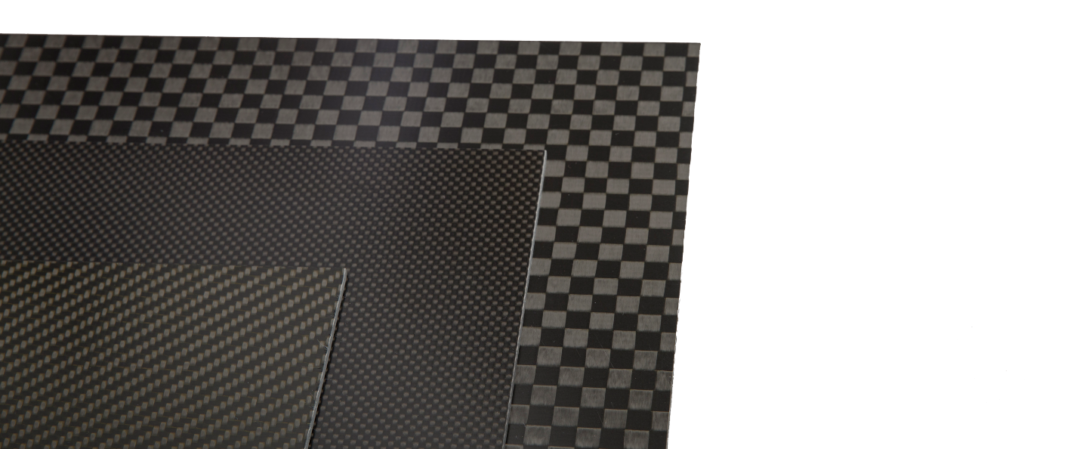
Carbon fibers are made from precursors such as polyacrylonitrile (PAN) and rayon. The precursor fibers are chemically treated, heated and stretched, and then carbonized to form high-strength fibers. These fibers or filaments are then bundled together and identified by the number of carbon filaments they contain. Common tow ratings are 3k, 6k, 12k, and 15k. The “k” stands for thousand, so a 3k tow is made from 3,000 carbon filaments. Standard 3k tow is typically 0.125 inches wide, so that’s a lot of fiber crammed into a small space. A 6k tow has 6,000 carbon filaments, a 12k tow has 12,000 carbon filaments, and so on. Large amounts of high-strength fibers bundled together make carbon fiber such a strong material.
carbon fiber weave
Carbon fiber often comes in the form of woven fabrics, which makes it easier to work with and can provide additional structural strength depending on the application. Therefore, carbon fiber fabrics can be woven in many different ways. The most common ones are plain, twill, and suspender satin, and we’ll cover each material in detail.
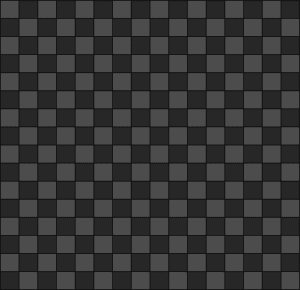
plain weave
The plain carbon fiber sheets have a symmetrical appearance with a small checkerboard appearance. In this weave, the strands are woven in an over/under pattern. The short distance between interweaves gives the plain weave a high degree of stability. Fabric stability refers to the ability of a fabric to maintain its weave angle and fiber orientation. Because of this high level of stability, plain weave is less suitable for layups with complex contours and it won't be as flexible as some other fabrics. Generally speaking, plain weave fabric is suitable for flat sheets, pipes and two-dimensional curves.
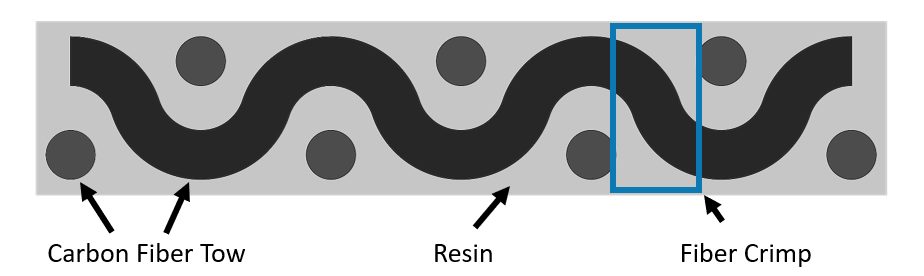
One disadvantage of this weaving pattern is that there is severe curling in the strands due to the short distance between interlacings (the angles the fibers form when weaved, see below). Harsh crimping creates stress concentrations that weaken the part over time.
Twill weave
Twill is the bridge between plain weave and satin weave which we discuss next. Twill fabric has good flexibility and can form complex contours. It is worse than suspender satin fabric in maintaining fabric stability, but not as good as plain weave fabric. If you follow the tow strands in a twill weave, it goes through a certain number of tows and then through the same number of tows. The up/down pattern creates the appearance of a diagonal arrow, called a "twill line." The longer distance between interlaced tows means less curl and less potential stress concentrations compared to plain weave fabrics.
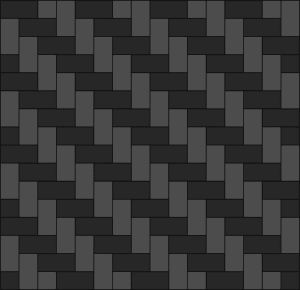
2×2twill fabric
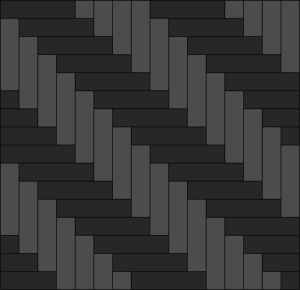
4×4 twill
2×2 twill is probably the most well-known carbon fiber weave in the industry. It is used in many cosmetic and decorative applications but is also highly functional, it combines medium formability with medium stability. As the 2×2 name implies, each tow will pass through 2 tows and then cross both tows. Likewise, a 4×4 twill will be threaded through 4 tows and then through 4 tows. It forms slightly better than 2×2 twill because the weave is not as tight, but it is also less stable.
harness satin
Satin weave was designed thousands of years ago to create silk fabrics with excellent drape while looking smooth and seamless. For composites, this drapeability means it can be easily formed and wrapped around complex contours. Since this fabric is highly formable, its stability is expected to be low. Common heddle satin weaves include 4-heddle satin (4HS), 5-heddle satin (5HS) and 8-heddle satin (8HS). As the amount of satin weave increases, formability increases while fabric stability decreases.
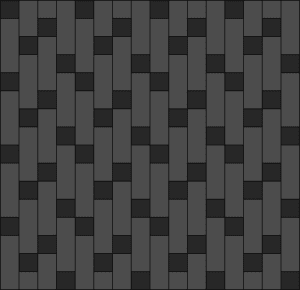
4HS
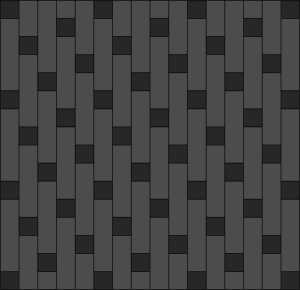
5HS
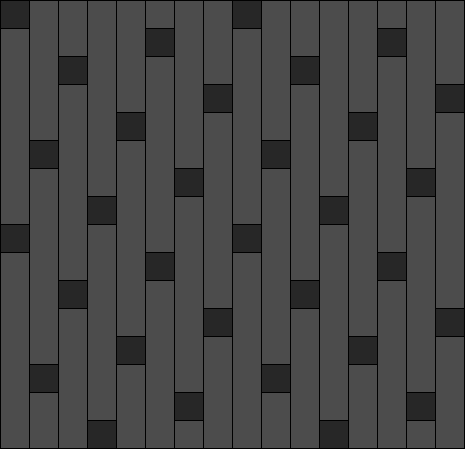
8HS
The number in the Harness Satin name indicates the total number of tows that pass through. For 4HS it will go through 3 tows and then under 1 tow. For 5HS it will go through 4 tows and then under 1 tow, and for 8HS it will go through 7 tows and then under 1 tow.
Spread tow vs. standard tow
Spread tow materials can be a good compromise between using unidirectional materials and standard braided materials. When fiber strands are woven up and down to form a fabric, the strength is reduced due to crimping in the strands. When you increase the number of filaments in a standard tow (e.g. from 3k to 6k), the tow becomes larger (thicker) and the curl angle becomes rougher. One way to avoid this is to spread the filaments into wider tows, this is called spreading the tows, and there are several benefits to doing this.
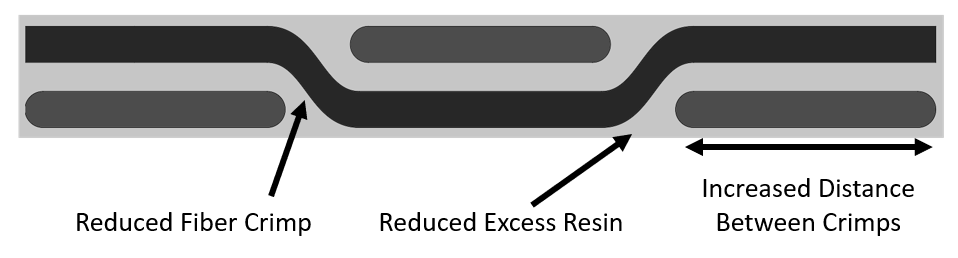
Spreading the tow provides a smaller curl angle than standard tow braiding and can reduce crossover defects by increasing smoothness. Lower crimp angle will result in higher strength. Spread tow materials are also easier to work with than unidirectional materials and still provide fairly good fiber pull-up prevention.
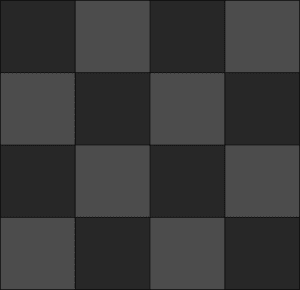
Unfold tow plain weave
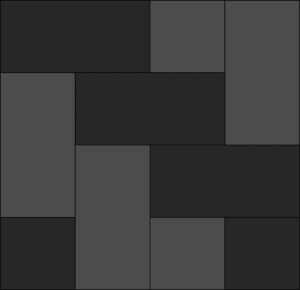
Spread tow twill weave
unidirectional
As the name suggests, uni, meaning one, all fibers are oriented in the same direction. This provides some high-strength advantages to unidirectional (UD) fabrics. UD fabric is not woven and does not have any crimped interwoven fibers that would weaken the structure. In contrast, continuous fibers add strength and stiffness. Another benefit is the ability to customize the layup with greater control over performance characteristics. Bicycle frames are a great example of how UD fabrics can be used to tailor performance. The bottom bracket area of the frame must be stiff to transfer the rider's power to the wheels, but the frame also needs to be flexible and flexible to avoid injuring the rider. With UD materials, you can choose the precise direction of the fibers to get the strength you need.
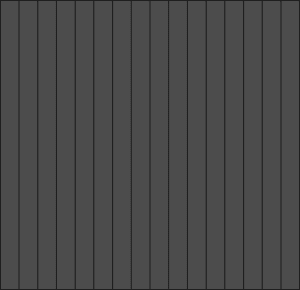
A major disadvantage of UD is its maneuverability. UD can easily fall apart during layup because it has no interwoven fibers to hold it together. If the fibers are placed incorrectly, it is nearly impossible to redirect them correctly again. Machined parts made from UD fabric can also cause problems. If any fibers pull up where the feature was cut, those loose fibers may pull up the entire part. Typically, if a UD material is selected for lamination, a layer of woven material will be used for the first and last layers to improve workability and part durability. This is done from drone frames for hobbyists all the way to production rocket parts.
Send Inquiry