




A new kind of Kevlar aims to stop bullets with less material
Aug 14, 2024
Leave a message
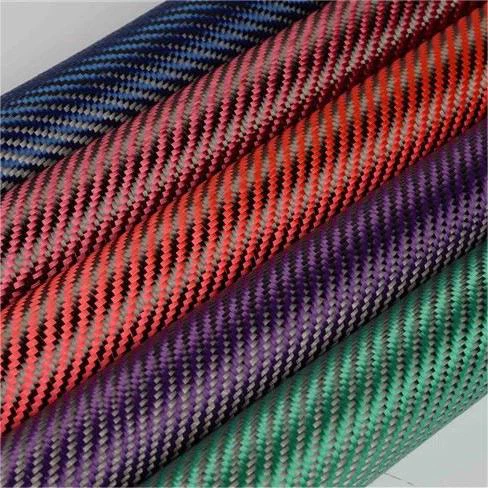
But a new type of Kevlar is on the horizon that aims to be just as ballistic-resistant as the original while being thinner and lighter. It won't be tailored into the John Wick-style suits you see in Hollywood movies, but DuPont, the company that makes it, says it's about 30 percent lighter. If regular Kevlar weighs about a pound per square foot, the new material weighs about 0.65 or 0.7 pounds per square foot.
"We invented a new fiber technology," says Steven LaGanke, global division head at DuPont.
Here's what to know about how bulletproof materials generally work, and what makes the new stuff different.
A bulletproof layer needs to do two things: Make sure a bullet can't penetrate it, and absorb its energy-and transfer that energy into the bullet itself, ideally deforming when it hits. If a layer of fabric stops a bullet but then becomes a loose web after being hit by a baseball, that's no good, explains Joseph Hovanec, the company's global technical manager. "You also don't want that net to fully extend, because now the bullet is sticking out into you."
The key is the strength of the fibers, and the fact that "they don't stretch very far," Hovanec said. "It's the drag of those fibers that causes the bullet-because it has so much momentum, [or] kinetic energy-to deform. So you're actually catching it, and the energy goes into deforming the bullet, not breaking the fibers." The bullet should "expand very quickly," he said. Here's a video of the simulation.
Kevlar, a synthetic fiber called para-aramid, isn't the only para-aramid in town: Another para-aramid used in body armor is called Twaron, and some body armor is also made from polyethylene (a type of plastic).
The new Kevlar is also an aramid fiber, but it's a little different than the original. Regular Kevlar is made of two monomers (a type of molecule), while the new Kevlar has one more, for a total of three. "The third monomer allows us to get an extra arrangement of these molecules in the final fiber, which gives us more strength than traditional aramid, Kevlar or polyethylene," Hovanec said.
Bullet-proof vests are often required to meet specific standards from the National Institute of Justice. The goal with the new Kevlar is that, because of its higher strength, it can meet the same standards when used in smaller quantities in a vest. For example, regular Kevlar is about 0.26 or 0.27 inches thick, while the new material can be as thin as 0.19 inches, Hovanec said. "That's a significant reduction in material thickness."
The ballistic layer made of materials like Kevlar or Twaron is only part of the body armor. "The ballistic layer does the job, but it's in a sealed carrier to protect it, and then there's the fabric that goes over the ballistic layer," Hovanec said. "When you finally see the finished product, there's a lot of extra material on top."
Send Inquiry