




How does the weave pattern affect the properties of carbon cloth?
Sep 22, 2026
Leave a message
Carbon cloth is a versatile and high - performance material widely used in various industries, including aerospace, automotive, marine, and sports equipment. As a carbon cloth supplier, I have witnessed firsthand the impact of different weave patterns on the properties of carbon cloth, which is crucial for customers to make informed decisions about their specific applications. In this blog, I will delve into how the weave pattern affects the properties of carbon cloth.
1. Basics of Carbon Cloth and Weave Patterns
Carbon cloth is made from carbon fibers, which are known for their high strength, low weight, and excellent chemical resistance. The weave pattern refers to the way the carbon fibers are interlaced. Common weave patterns include plain weave, twill weave, satin weave, and triaxial weave, each with its own unique characteristics.
Plain Weave
The plain weave is the simplest and most common weave pattern. In a plain weave, the warp (lengthwise) and weft (cross - wise) fibers alternate over and under each other. This creates a balanced and stable structure. The Pan - Based Carbon Cloth For Reinforcement Carbon Fabric can be produced in a plain weave pattern, which provides good overall strength and is suitable for general - purpose applications.
Twill Weave
In a twill weave, the weft fibers pass over a certain number of warp fibers and then under a certain number of warp fibers, creating a diagonal pattern on the surface of the cloth. Twill weaves are often used in high - performance applications because they offer better drapeability than plain weaves. The 3K 200GSM Twill Weave Carbon Fiber Cloth For Yacht is a great example of a twill - woven carbon cloth. It is highly sought after in the yacht - building industry due to its ability to conform to complex shapes while maintaining high strength.
Satin Weave
Satin weaves have a smooth and glossy appearance. In a satin weave, the weft fibers float over several warp fibers, resulting in a softer and more flexible fabric compared to plain and twill weaves. Satin - woven carbon cloth is commonly used in applications where appearance is important, such as in luxury automotive interiors.
Triaxial Weave
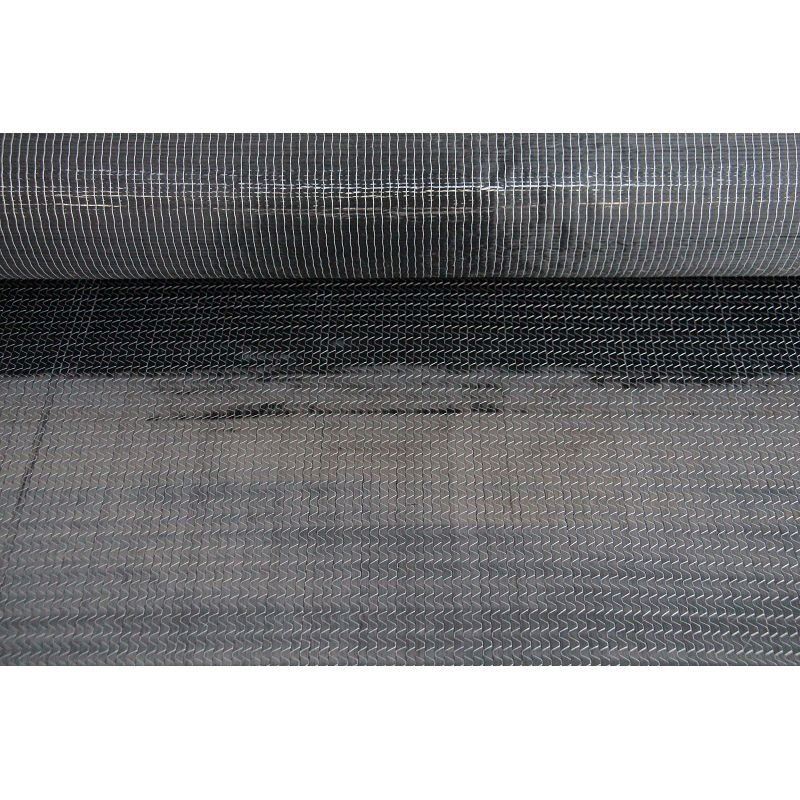
Triaxial weaves are composed of fibers oriented in three directions, typically at 0°, +60°, and - 60°. This unique orientation provides strength in multiple directions, making triaxial - woven carbon cloth ideal for applications that require uniform strength in different axes. The Triaxial Carbon Fiber 300g is a prime example of a triaxial - woven carbon cloth that offers enhanced performance in complex stress environments.

2. Impact on Mechanical Properties
Tensile Strength
The weave pattern significantly affects the tensile strength of carbon cloth. Plain weaves generally have good tensile strength in both the warp and weft directions because the fibers are closely interlaced, providing a strong structure to resist pulling forces. However, twill and satin weaves may have slightly lower tensile strength in the individual fiber directions but offer better overall strength in complex loading situations due to their improved drapeability and ability to distribute stress more evenly. Triaxial weaves, on the other hand, offer high tensile strength in multiple directions, making them suitable for applications where forces act from various angles, such as in advanced composite structures.
Flexural Strength
Flexural strength refers to the ability of a material to resist bending. The drapeability of the weave pattern plays a crucial role in flexural strength. Twill and satin weaves, with their better drapeability, can conform to curved shapes more easily during the manufacturing process. This allows for a more uniform distribution of stress when the carbon cloth is bent, resulting in higher flexural strength compared to plain weaves in some cases. Triaxial weaves also offer good flexural strength due to their multi - directional fiber orientation, which helps to resist bending forces from different directions.
Shear Strength
Shear strength is the ability of a material to resist forces that cause one part of the material to slide past another. Triaxial weaves excel in shear strength because of their three - directional fiber orientation. The fibers in different directions can effectively transfer shear forces, preventing the material from deforming under shear stress. Plain and twill weaves have different levels of shear strength depending on their fiber structure. A well - made twill weave may have better shear resistance than a plain weave due to its diagonal pattern, which can better distribute shear forces.
3. Impact on Physical Properties
Thickness
The weave pattern can influence the thickness of the carbon cloth. Plain weaves, with their simple interlacing of fibers, tend to be thinner compared to twill and satin weaves. Twill and satin weaves have more floating fibers, which can increase the thickness of the cloth. Triaxial weaves can also have variable thicknesses depending on the fiber density and the manufacturing process. The thickness of the carbon cloth is an important consideration in applications where space is limited or where a certain level of insulation or protection is required.
Surface Finish
The surface finish of carbon cloth is affected by the weave pattern. Plain weaves have a relatively flat and uniform surface, which is suitable for applications where a smooth finish is desired. Twill weaves have a characteristic diagonal pattern on the surface, which can add a decorative touch in addition to its functional properties. Satin weaves have a smooth and shiny surface, making them ideal for applications where appearance is a priority. The surface finish can also affect the adhesion of the carbon cloth to other materials during the manufacturing process.
Porosity
Porosity refers to the presence of small holes or voids in the carbon cloth. Different weave patterns can result in different levels of porosity. Plain weaves, with their tight interlacing, tend to have lower porosity. Twill and satin weaves may have slightly higher porosity due to the floating fibers, which can create small gaps between the fibers. Triaxial weaves can have varying porosity depending on their fiber arrangement. The porosity of the carbon cloth can affect its permeability to gases and liquids, which is important in applications such as filtration. The Black Activated Carbon Active Carbon Filter Activated Carbon Cloth utilizes its specific porosity for efficient filtration.
4. Impact on Manufacturing and Processing
Drapeability
Drapeability is the ability of the carbon cloth to conform to curved or complex shapes. Twill and satin weaves have better drapeability than plain weaves because of their floating fibers. This makes them easier to work with in manufacturing processes where the carbon cloth needs to be molded into intricate shapes, such as in the production of aircraft components or automotive body parts. Plain weaves, with their more rigid structure, may require additional cutting and joining to achieve the desired shape.
Resin Absorption
The weave pattern also affects the resin absorption of the carbon cloth. Weaves with higher porosity, such as twill and satin weaves, can absorb more resin, which is beneficial in composite manufacturing processes. The resin impregnates the carbon fibers, binding them together and providing additional strength and protection. However, excessive resin absorption can also lead to longer curing times and higher costs. Plain weaves, with their lower porosity, may require less resin but may also need more careful handling to ensure proper impregnation.
Processing Speed
The processing speed of carbon cloth depends on its weave pattern. Triaxial weaves, due to their complex fiber orientation, may require more time and precision during manufacturing, which can slow down the processing speed. Plain and twill weaves are generally easier to process and can be manufactured more quickly, making them more suitable for high - volume production.
5. Considerations for Different Applications
Aerospace Industry
In the aerospace industry, high strength - to - weight ratio, excellent fatigue resistance, and precise dimensional tolerance are crucial. Triaxial weaves are often used in critical aerospace components because of their multi - directional strength and ability to withstand complex loading conditions. Twill weaves are also popular for applications where drapeability is required, such as in the production of aircraft fairings.
Automotive Industry
In the automotive industry, carbon cloth is used for both structural and aesthetic purposes. For structural components, such as chassis parts, high - strength plain or twill weaves are preferred. Satin weaves are commonly used for interior trim parts to provide a luxurious appearance. The Long Service Life And Hot Pressing Composite Activated Carbon Cloth can also find applications in automotive air filtration systems.
Marine Industry
In the marine industry, carbon cloth needs to be resistant to water, salt, and UV radiation. Twill weaves are widely used in yacht building because of their good strength, drapeability, and ability to conform to the curved shapes of the hull. The 3K 200GSM Twill Weave Carbon Fiber Cloth For Yacht is a prime example of a carbon cloth specifically designed for marine applications.
Conclusion
As a carbon cloth supplier, I understand that choosing the right weave pattern is crucial for achieving the desired properties and performance in different applications. The weave pattern affects the mechanical, physical, and processing properties of carbon cloth in various ways. Whether you need high tensile strength, good drapeability, or a specific surface finish, there is a weave pattern that can meet your requirements.
If you are interested in learning more about our carbon cloth products or have specific needs for your projects, please feel free to contact us for procurement and further discussions. Our team of experts is ready to assist you in selecting the most suitable carbon cloth for your application.
References
- Callister, William D., and David G. Rethwisch. Materials Science and Engineering: An Introduction. Wiley, 2019.
- Mallick, P. K. Fiber - Reinforced Composites: Materials, Manufacturing, and Design. CRC Press, 2007.
Send Inquiry